How Delhi Pigeon-Proofed a World Championship: Castor Oil, Fake Eagles and a Man Who Screams Like a Langur
Somewhere around the Indira Gandhi Arena this week, a man named Jabbar is screaming like a langur. He is being paid to do it, he leads a small team who do it with him, and it is - by some distance - the most quietly effective piece of sports infrastructure India has commissioned all year.
To understand why a World Championship venue employs professional monkey-impersonators, you have to go back seven months.
January: the birds win
The India Open came to Delhi in January. It is a Super 750 - the tier just below the very top of the World Tour - and it went badly in a way that no amount of good badminton could drown out.
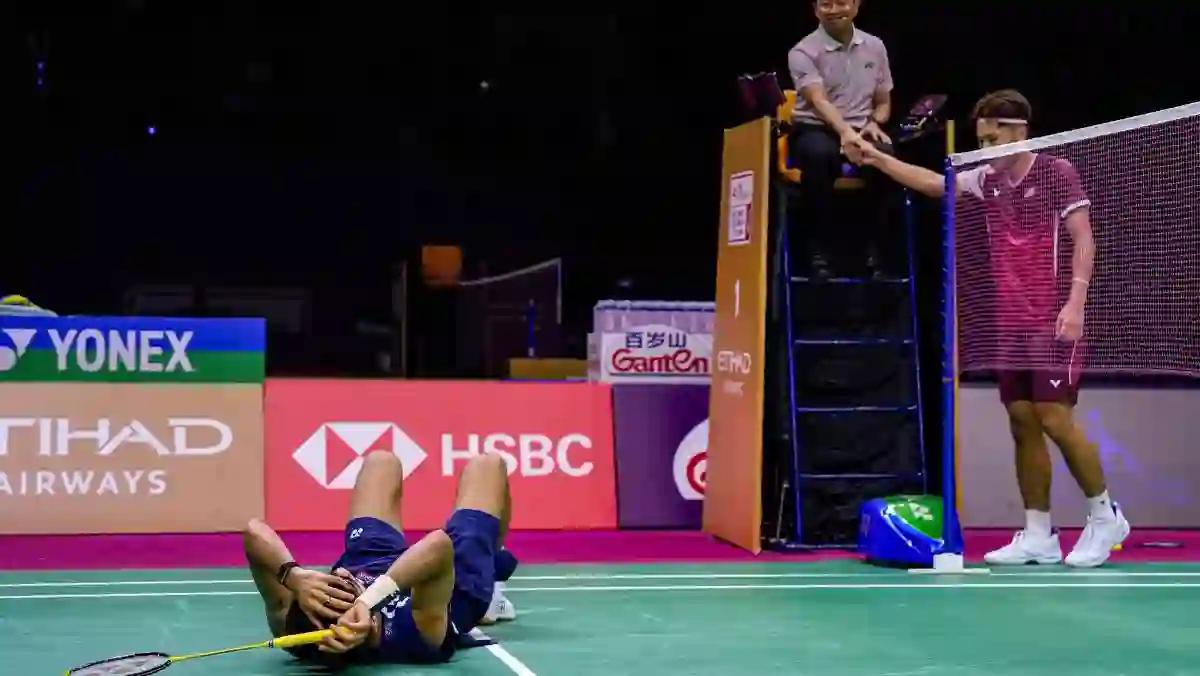
On 15 January, HS Prannoy’s match against Loh Kean Yew was stopped. Then it was stopped again. Both times because pigeons had defecated on the court and someone had to go out and clean it while two professional athletes stood around waiting. At another point in the week, a monkey was spotted in the spectator gallery, presumably having a better time than anyone.
Denmark’s Mia Blichfeldt, who was there and playing, did not sugar-coat it.
The conditions surrounding us are simply unacceptable and highly unprofessional. Everyone is stressed and frustrated by the conditions we are being met with at a World Tour Super 750 event.
And then she said the sentence that almost certainly unlocked the budget:
I find it very difficult to see how a World Championship could be held here.
Anders Antonsen, then world number three, withdrew from the tournament altogether - his third successive withdrawal from the India Open - citing Delhi’s air quality rather than the wildlife. He was fined $5,000 for it. That one is a genuinely serious point rather than a punchline: air pollution in Delhi in January is a health issue, not a quirk.
Lin Chun-Yi won the title that week, playing some of the best badminton of his career. Almost nobody outside India wrote about that.
August: the counter-offensive
The World Championships were already scheduled for the same Delhi venue in August. Which meant the Sports Authority of India and the Badminton Association of India had seven months to make sure the sport’s flagship event was not remembered for droppings. They spent roughly ₹20 crore.
The resulting list of countermeasures is the most entertaining document in Indian sport this year.
The problem
The solution
Pigeons roosting on the roof
A non-toxic castor-oil-based gel, so they slide off when they try to land
Pigeons getting inside at all
Every air vent sealed
Pigeons, in general
Six imported American machines that play bird-of-prey calls through the night
Monkeys
A team of mimicry artists who imitate langur calls
Monkeys and birds using the doors
All 16 entrances converted from wooden doors to automatic double glass doors
A leaking roof
Waterproofed, expansion joints treated
Shadows falling across the court
Additional lighting fixtures installed
Tired seating
Chairs replaced through the stands
Read that list again and notice what it is not. There is no netting slung across the ceiling, no cull, no gesture. Every single item is a specific, physical, testable answer to a specific, physical, observed failure. Somebody sat down, listed exactly how the birds were getting in and where they were sitting, and closed each route one at a time.
The langur department
The monkey solution deserves its own section, because it is both funnier and smarter than it first sounds.
Rhesus macaques - Delhi’s monkeys - are genuinely frightened of langurs, which are bigger and territorial. For years the city used real langurs on leashes, until that was banned as the wildlife-protection violation it was. What replaced it is people: mimicry artists who can produce a langur call convincingly enough that the macaques clear out. Reports put the Delhi team at three or four members, led by a man named Jabbar.
So the actual anti-monkey infrastructure of the 2026 World Championships is a handful of men with very good voices. It is cheap, it is humane, it is completely legal, and it works. You can laugh at it - please do - but it is a better solution than most of the expensive ones.
What the officials say
SAI executive director Amber Pratap Singh on the unglamorous half of the job: “The old roof has been treated and repaired to make it waterproof, expansion joints have been treated, and you can see a lot of chairs in the seating area have been replaced.” BAI secretary Sanjay Mishra, on the bit that actually decides matches: the BWF is satisfied with the lighting in both the competition and practice arenas.
Lighting matters more than any of the animal stories. Shadows across a court change how players read a shuttle at the back of the rally, and that is the sort of thing that quietly decides a world title.
The delicious part
Both of January’s critics are in this week’s draw.
Anders Antonsen is seeded 4 in men’s singles. Mia Blichfeldt - who said she could not see how a World Championship could be held here - is seeded 16 in women’s singles, and will be playing at exactly the venue she was talking about.
That is not a gotcha. It is the best possible outcome. She made a specific, public, uncomfortable complaint; the people responsible went away and fixed the specific things she named; and now she is back to play in the fixed building. That is the system working, and it only worked because somebody said the awkward thing out loud with their name attached.
What gets measured gets fixed
The reason the roof got sealed is not that anyone suddenly cared more about roofs. It is that the problem became visible, specific and countable - this match, this date, this many stoppages, this player, this quote. Vague dissatisfaction gets you nothing. “Pigeons stopped the Prannoy match twice on 15 January” gets you ₹20 crore and six imported eagle machines.
Your badminton works the same way. “I’ve been playing badly lately” is not actionable. “My smash contact point drops about 20 centimetres in the third game, and that’s when my error rate doubles” is a thing you can actually train. Most players never get past the first sentence, not because they lack effort, but because nobody has ever handed them the second one.
Common questions
What happened with the pigeons at the India Open 2026?
On 15 January 2026, HS Prannoy’s match against Loh Kean Yew was halted twice so that bird droppings could be cleaned off the court. A monkey was also spotted in the spectator gallery during the week, and several players criticised the hygiene and air quality.
Has the Delhi venue actually been fixed for the World Championships?
It has had roughly ₹20 crore of work: the roof waterproofed and coated with a non-toxic gel that stops pigeons perching, all air vents sealed, six imported sound machines that play bird-of-prey calls, all 16 entrances converted to automatic glass doors, upgraded lighting and replaced seating.
Are they really using people to imitate monkeys?
Yes. A small team of mimicry artists, led by a Delhi resident named Jabbar, imitate langur calls to keep rhesus macaques away from the stadium. Macaques are naturally wary of langurs, and using real langurs is banned under wildlife protection rules.
Did Anders Antonsen complain about the pigeons?
No - Antonsen withdrew from the India Open over Delhi’s air pollution, his third successive withdrawal from that tournament, and was fined $5,000. The hygiene and bird complaints came mainly from Mia Blichfeldt. Both are seeded at the World Championships this week.
Our recap of that tournament is here, and for this week’s schedule, seeds and how to watch, see the full championships guide.
Kreeda is not affiliated with or endorsed by the Badminton World Federation. Reports differ on the exact size of the mimicry team; figures and quotes are as published by SAI, BAI and Indian media.