How Much Ground a Badminton Player Actually Covers — and Why It Decides Matches
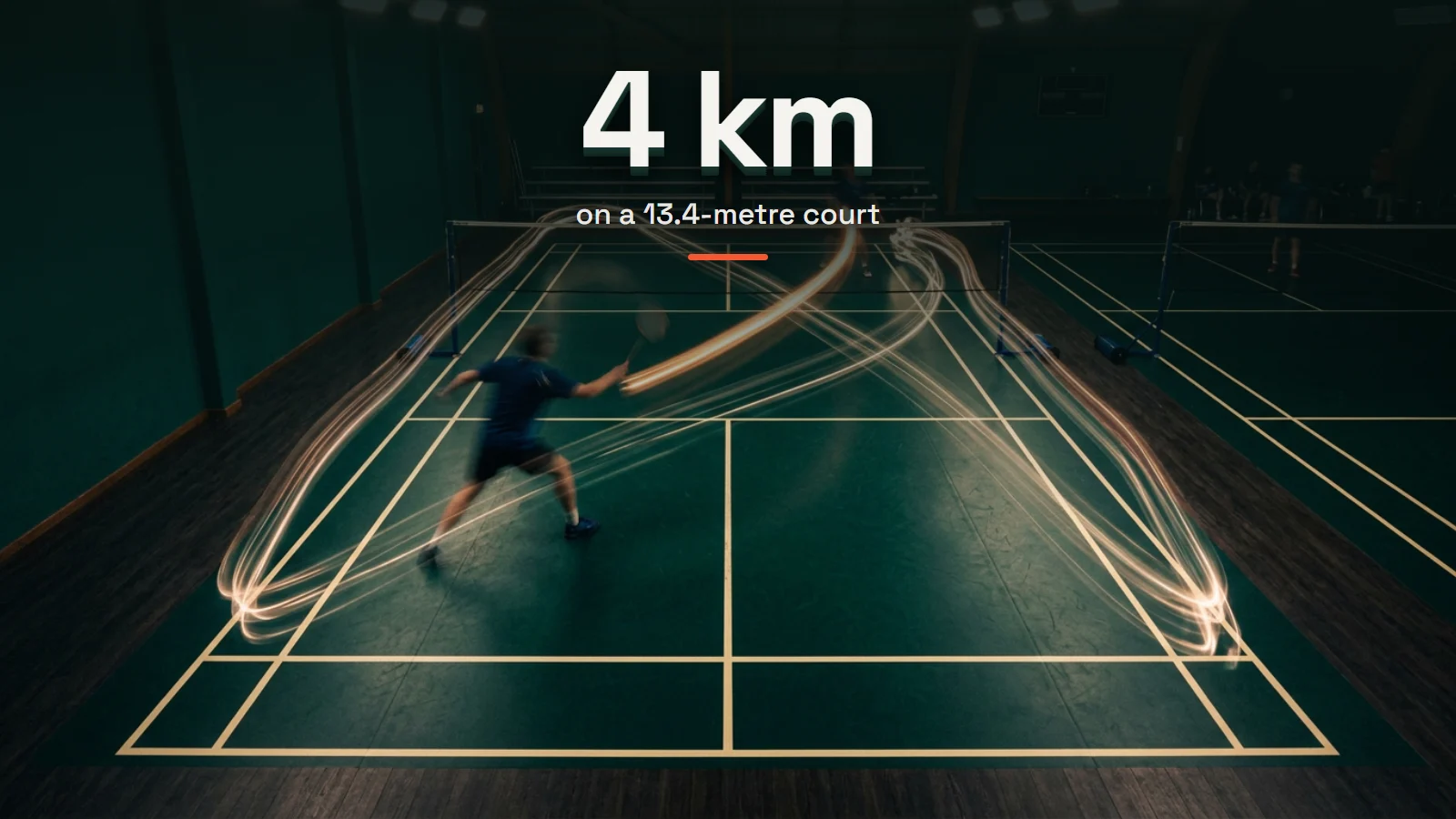
An elite singles player covers somewhere over 4 kilometres in a match, on a court that is 13.4 metres long. Published estimates range from about 3.9 km to nearly 6 km depending on the match, the level and how it was measured — and that spread is more useful to understand than any single number.
Badminton is the most movement-dense racket sport there is, and the numbers are genuinely strange when you first see them.
The comparison that makes the point
Badminton singles
Tennis singles
Distance covered
~5.95 km
~2.89 km
Shots played
~1,972
~1,004
Match duration
Roughly half as long
Roughly twice as long
The widely-cited comparison of an All England final against a Wimbledon final. Twice the running and twice the shots, in half the time.
Other studies land lower — one analysis of women’s singles put total distance at 3.9 km, and the BWF’s own figure is "more than four kilometres". None of these are wrong. They are measuring different matches, at different lengths, with different methods.
Why the court is small and the distance is huge
A badminton court is 13.4 m long and 5.18 m wide for singles. Your half is 6.7 m deep. From a central base position, no corner is more than about 4 metres away. So how do you run 4 kilometres inside a box that small?
Because you go back to the middle every single time. Badminton movement is not a run, it is roughly a thousand short accelerations and decelerations out to a corner and back to base. A four-metre lunge and recovery is eight metres of travel, and there are around 1,900 shots in a long match. The distance is a by-product of the recovery, not the reach.
Which is exactly why total distance is a poor measure of anything. Running further can mean you are covering the court well, or it can mean you are being moved around at will. The number alone cannot tell the difference.
Coverage is about distribution, not distance
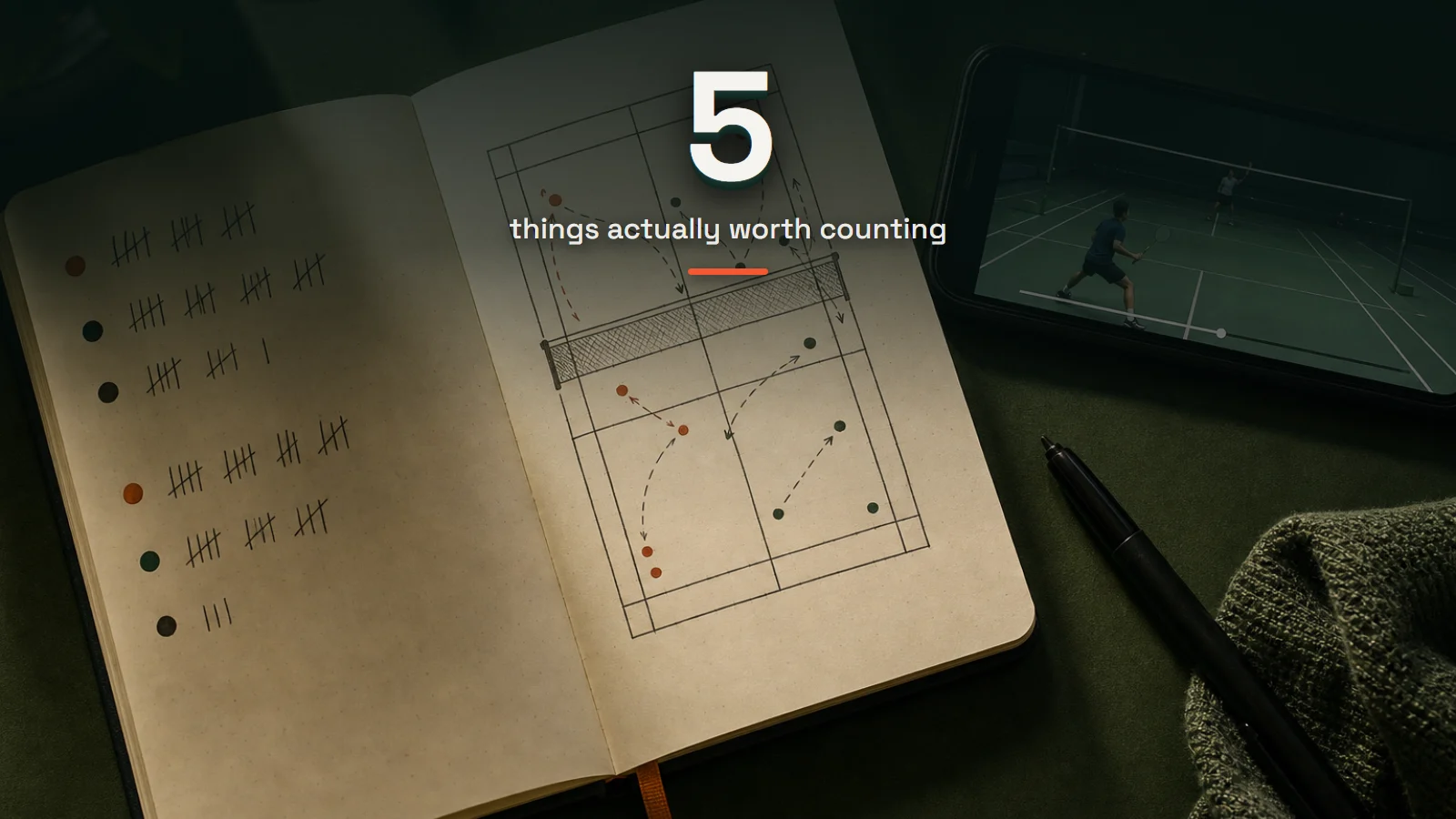
The question worth asking is not how far you travelled but where you went — and, more revealingly, where you stopped going.
Which corner do you reach late? Almost everyone has one, and it is usually the backhand rear.
Do you actually return to a central base between shots, or drift to one side and stay there?
Does your court coverage shrink as the match goes on? A shrinking pattern in the third game is fatigue made visible.
Is there a zone you have quietly conceded — a spot the opponent can hit to whenever they want a free point?
That last one decides more club matches than fitness does. Once an opponent finds a corner you do not defend, they do not need to play better badminton than you — they only need to keep hitting there.
How to actually improve it
Fix the return to base before anything else. Most coverage problems are recovery problems, not speed problems.
Train the corner you reach late specifically, as its own drill, rather than hoping general fitness covers it.
Use split-step timing — moving as your opponent strikes rather than after you see where it went buys more than raw pace ever will.
Check the pattern again after four to six weeks. Coverage improves slowly and invisibly, which is why it needs measuring rather than feeling.
You cannot eyeball any of this from watching a video back — which is the honest case for measuring it. Kreeda scores movement and court coverage from an uploaded clip, so the shrinking third game and the conceded corner show up as something you can see rather than something you suspect.
Common questions
How far does a badminton player run in a match?
Published estimates for elite singles range from about 3.9 km to nearly 6 km, with the BWF citing more than four kilometres. It varies enormously with match length and level, which is why an individual measurement is worth more than any average.
How big is a badminton court?
13.4 m long, 6.1 m wide for doubles and 5.18 m for singles. Each half is 6.7 m deep, so no corner is more than roughly four metres from a central base position.
Why is badminton distance so high on such a small court?
Because you recover to a central base after almost every shot. It is around a thousand short accelerations and decelerations rather than continuous running — the distance comes from the recovery, not the reach.
Is covering more distance good or bad?
Neither on its own. It can mean excellent coverage or being comprehensively moved around. Distribution — which corners you reach and which you concede — is the meaningful measure.