To analyse your own match video properly, stop watching it and start counting it. Pick one metric, watch the whole clip through only for that, write down what you see, then repeat. It is slow and slightly boring, and it will tell you more in forty minutes than a season of playing on feel.
Almost every amateur who films a match watches it back exactly once, enjoys the two rallies they won well, winces at one error, and learns nothing. That is not analysis - it is highlights. Your memory of a match is a highlights reel too, which is precisely why it cannot be trusted as evidence.
Why watching it back does not work
Patterns are invisible at full speed. A weakness that shows up in one rally out of nine is genuinely hard to notice while watching, and yet one-in-nine is enough to lose you every close match you play. The whole value of video is that it lets you count things instead of remembering them, and counting is the part people skip.
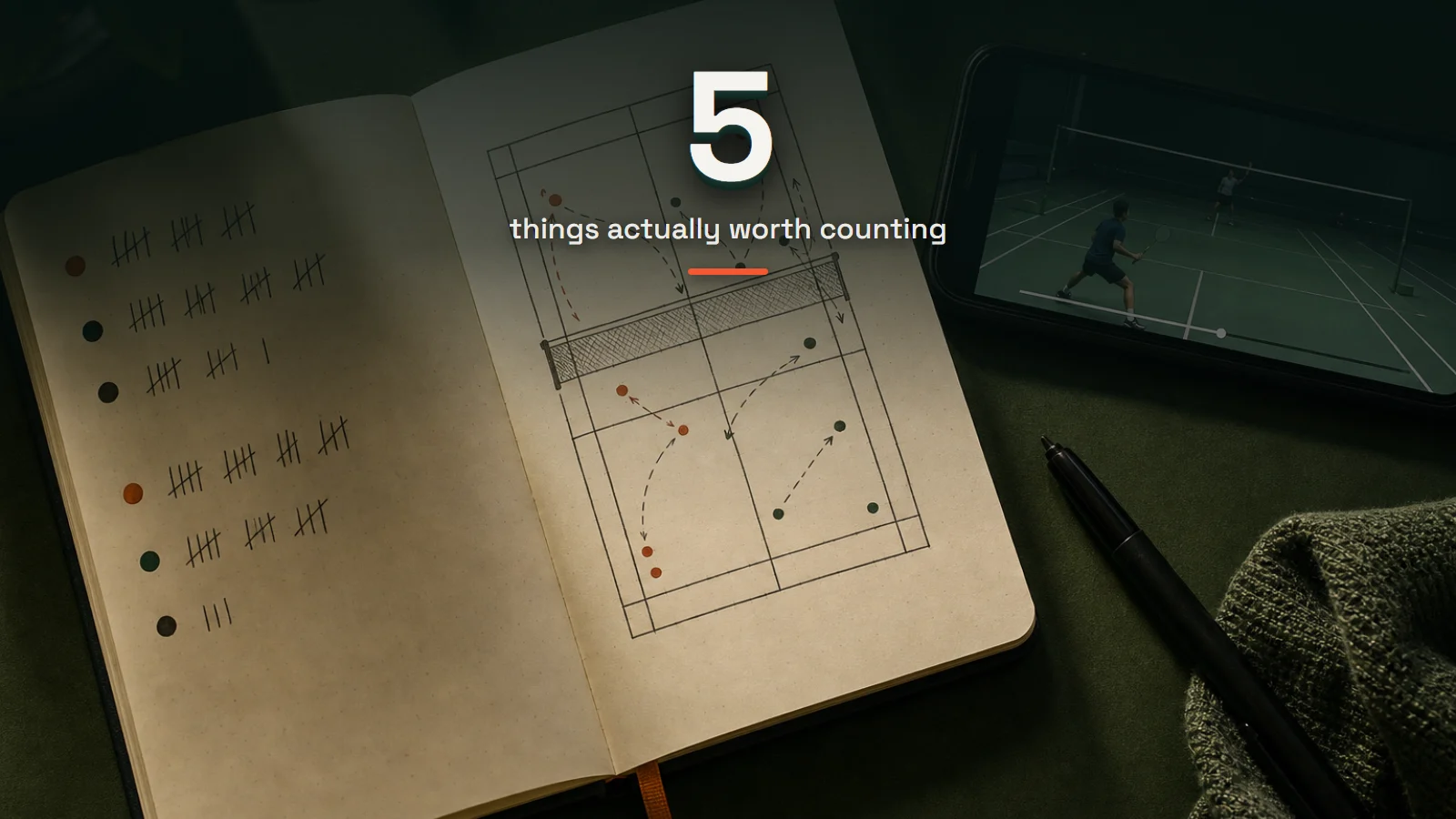
The five things worth counting
You do not need software for any of this. A notebook and the ability to scrub a video will do. Count one at a time - trying to track everything in one pass is how people give up after ten minutes.
| Count this | How | What it tells you |
|---|---|---|
| Rally length | Shots per rally, rally by rally. Just tally marks. | Whether you lose short rallies (serve and third shot) or long ones (fitness, patience). Completely different fixes. |
| Where the point ended | Mark each lost point: your error, or their winner? | Most amateurs assume they get outplayed. Usually they are just missing. |
| Error location | Note where on the court your errors happen - net, rear, forehand side, backhand side. | Errors cluster. Two or three spots will account for most of them. |
| Shot mix | Tally your clears, drops, smashes, drives, net shots. | If one shot is 40% of everything you hit, you are readable - and good opponents will read it. |
| Contact height | On your smashes and clears, is contact above your head or dropping? | Falling contact height as a match goes on is the single clearest fatigue signal. |
If you only ever do one of these, do the second. The difference between "they were too good" and "I made eleven unforced errors" changes what you train tomorrow, and it is the one thing players are most consistently wrong about.
The pass-by-pass method
- Watch once at full speed, no notes. Get the game out of your system so you stop reacting to it.
- Pass two: rally lengths only. One tally mark per rally, and circle the ones you lost.
- Pass three: how each lost point ended - your error or their winner. Two columns.
- Pass four: your errors only, marking roughly where on court each happened.
- Now look at your page. The clusters are your training plan for the next fortnight.
A pattern you can name is a pattern you can train. Everything else is just a feeling about your own game.
Where doing it by hand breaks down
Honestly: the method above works, and if you are disciplined about it you do not need anything else. The problem is cost. Four passes over a forty-minute match is most of an evening, and it has to be repeated every match for the trends to mean anything - because a single match is a small sample and small samples lie.
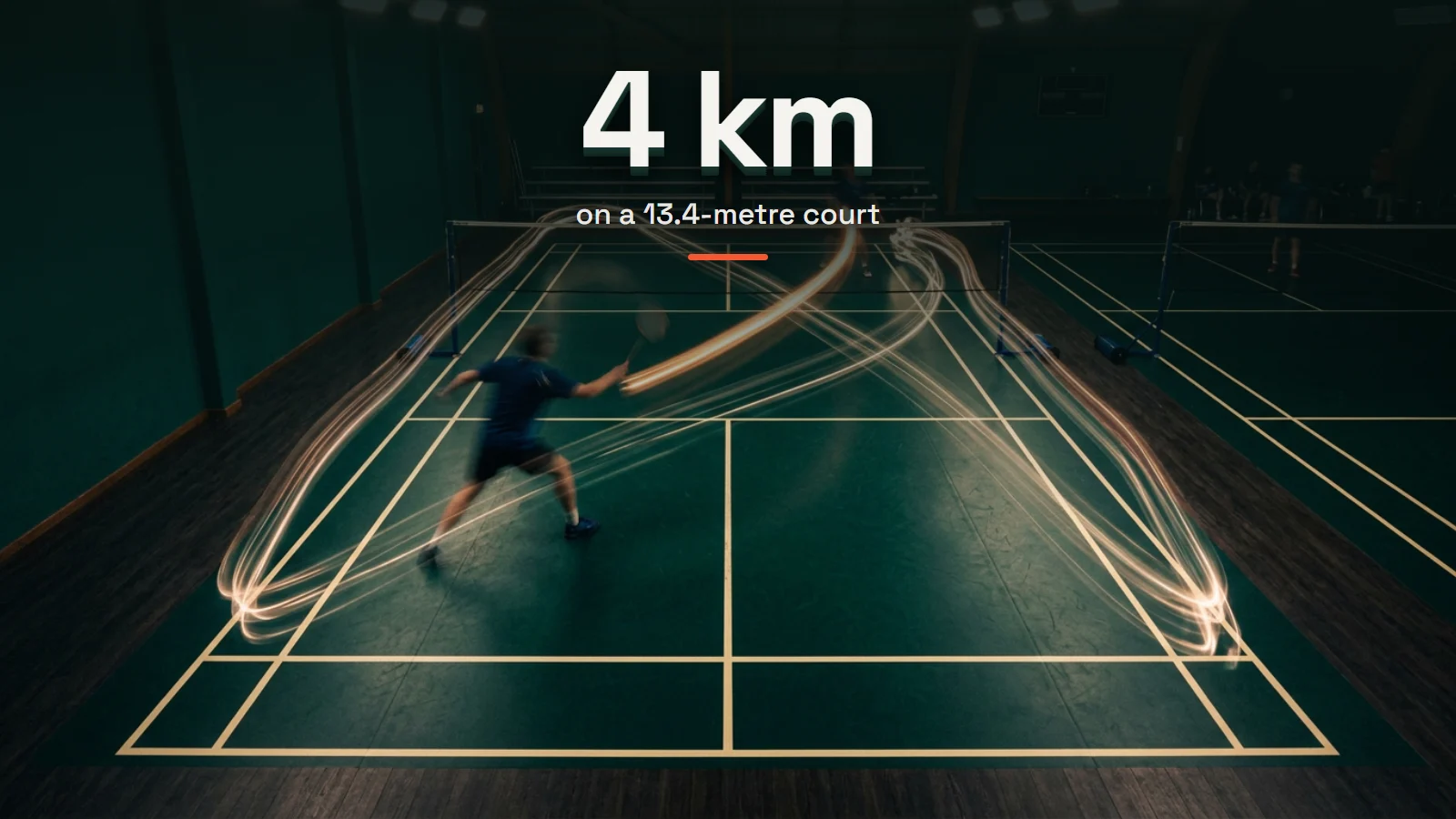
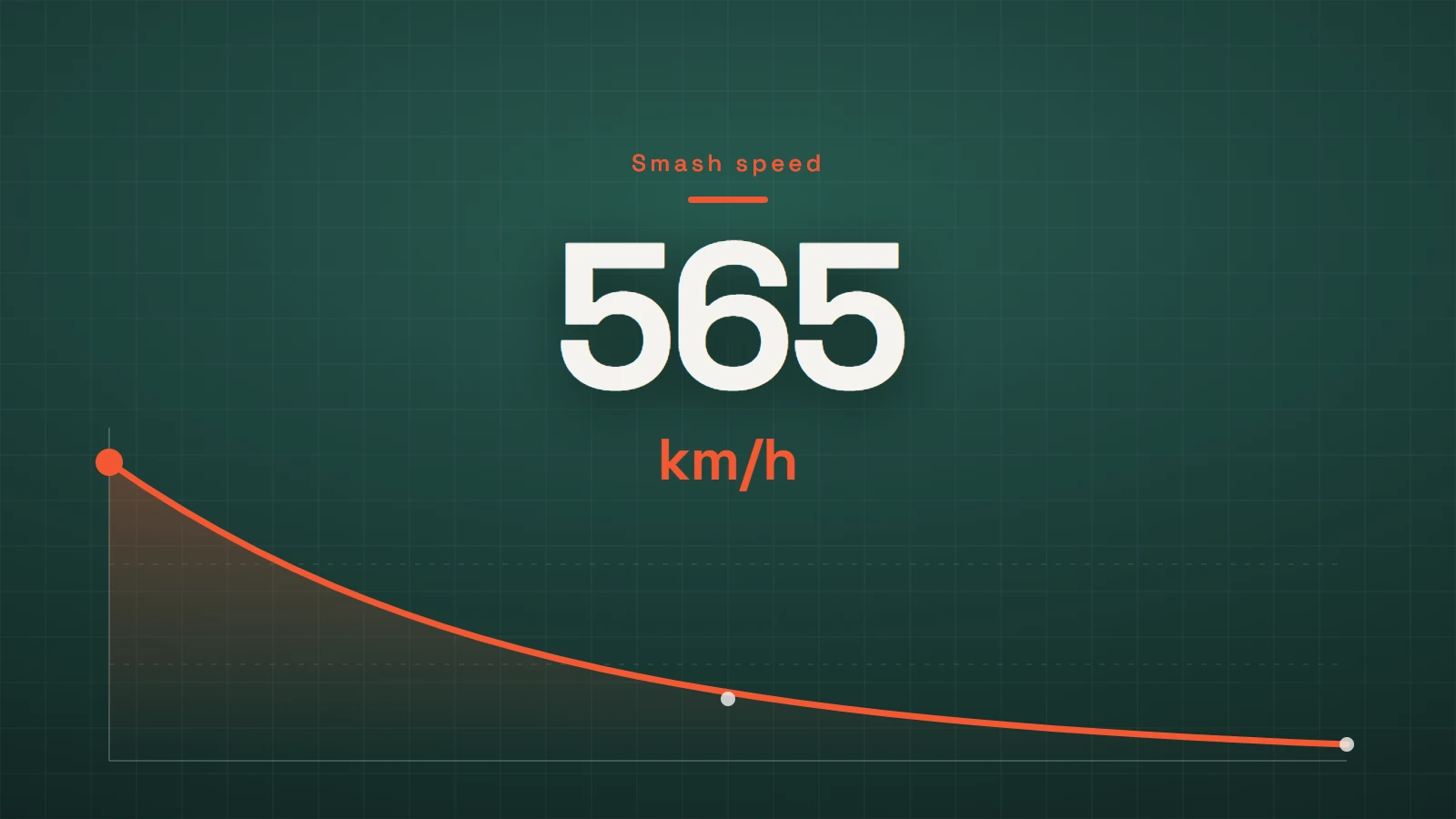
Two things are also genuinely beyond the naked eye. You cannot judge shuttle speed by watching, and you cannot estimate how much ground you covered or which parts of the court you quietly stopped defending. Those need measurement, not attention.
That is the gap Kreeda was built for. Upload a clip and it identifies each shot, estimates smash speed, and scores movement and court coverage - the counting done for you, consistently, every time, so the trend across ten matches is visible rather than theoretical.
Common questions
How long should the video be to analyse properly?
Two minutes of continuous play tells you more than ten minutes of a match with long gaps. You want rallies, not walking between points. If you are uploading to Kreeda, 120 seconds is the maximum clip length.
Do I need a coach to analyse my own footage?
No. Counting rally lengths, error locations and shot mix requires no coaching knowledge at all - only patience. A coach helps you decide what to do about what you find, which is a different job.
What is the single most useful thing to track?
Whether you lost each point to your own error or to your opponent’s winner. Most players significantly overestimate how often they were outplayed, and that misreading sends them into the wrong training.
Can I analyse a doubles match the same way?
Mostly yes - rally length, error location and shot mix all transfer. Court coverage is less meaningful in doubles, since your responsibility is a rotating half of the court rather than all of it.
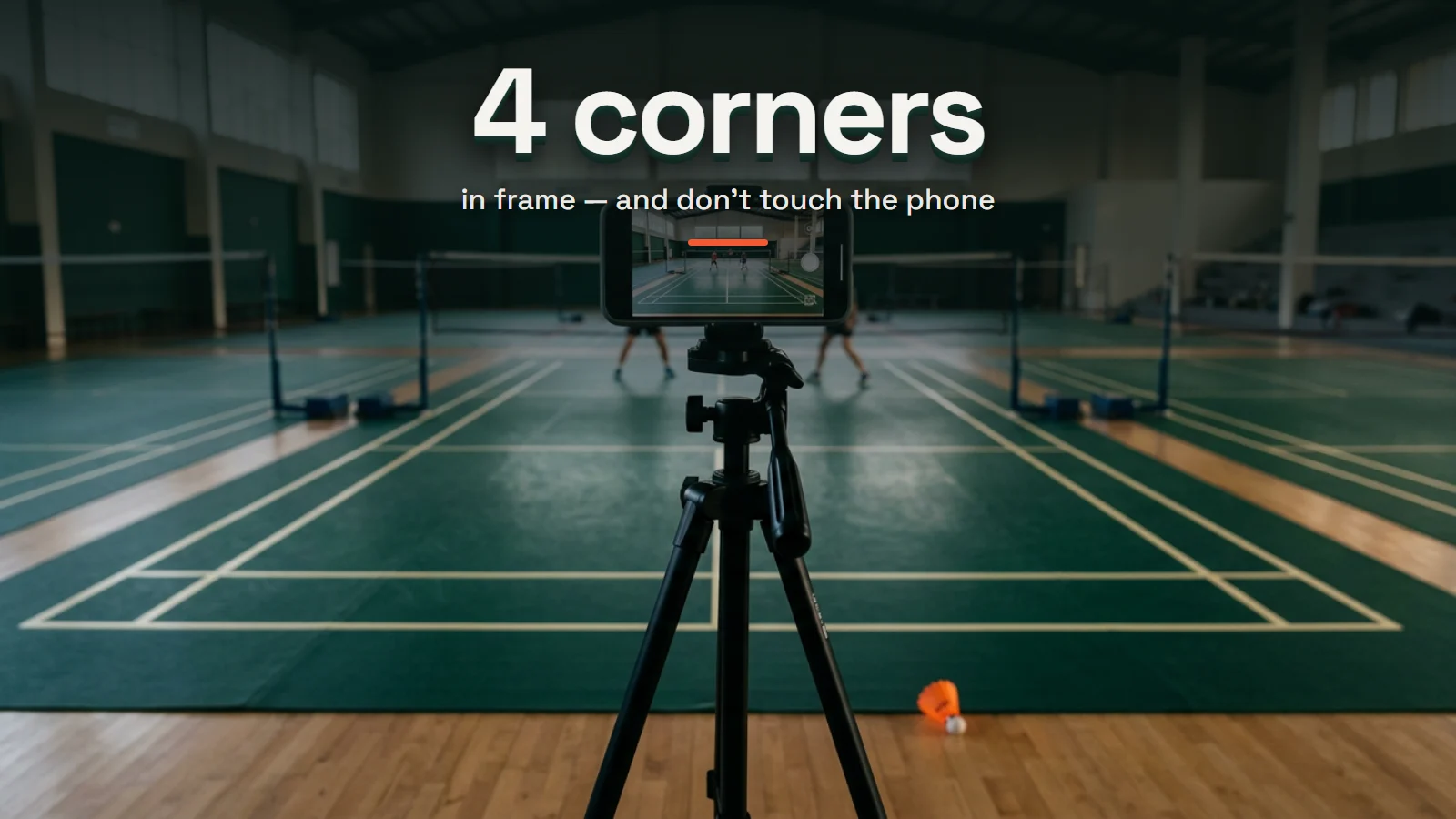
Before any of this, you have to film it usefully - see how to film your match on a phone. And for what the movement numbers actually mean, read how much ground a player really covers.