565 km/h: How Badminton Smash Speed Is Actually Measured - And What Yours Really Hits
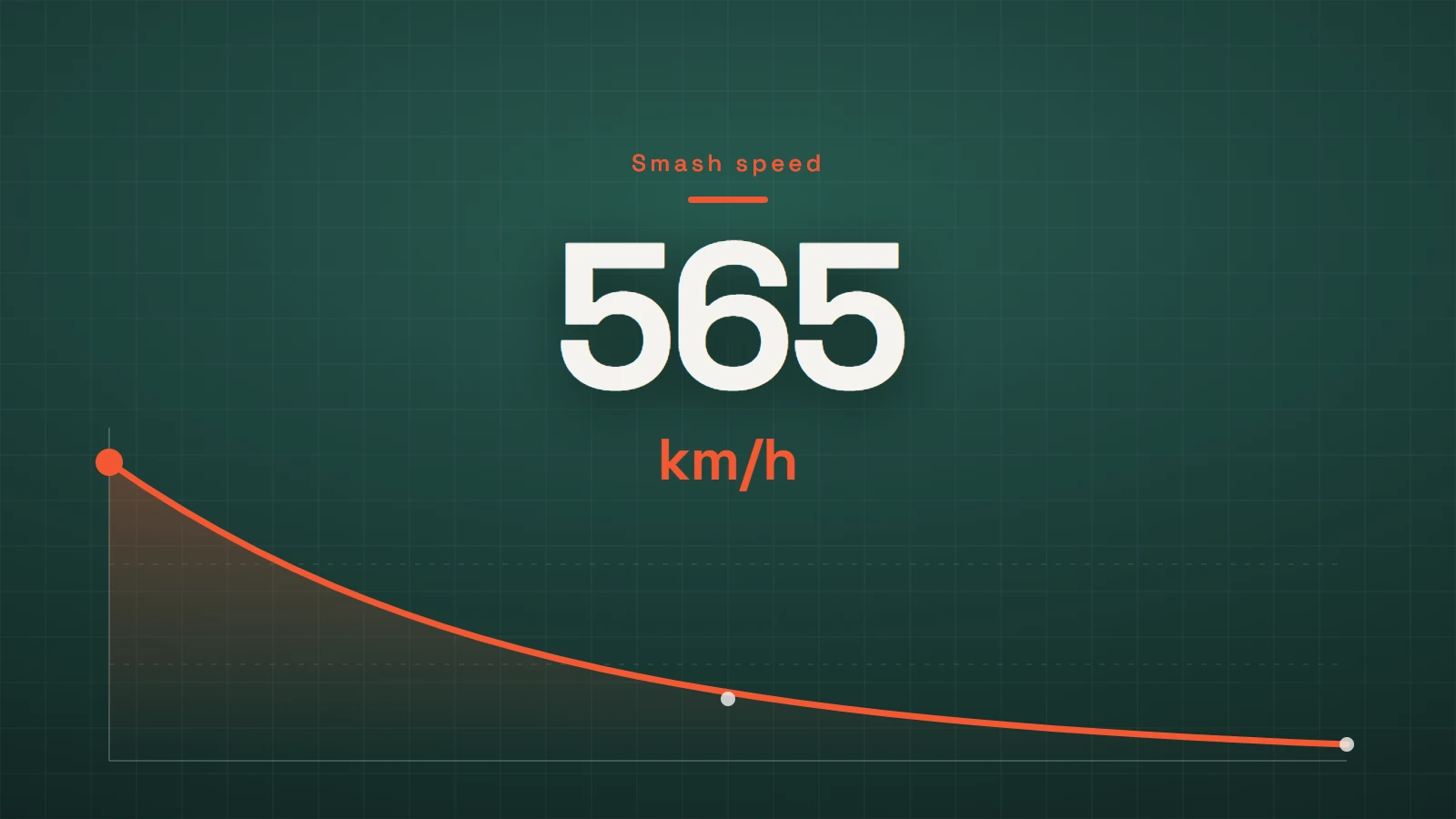
The fastest badminton smash ever recorded is 565 km/h, hit by India’s Satwiksairaj Rankireddy in 2023. But that number describes the shuttle at one specific instant - the moment it leaves the strings - under controlled test conditions. It is not the speed the shuttle is travelling when it crosses the net, and it is not what anyone hits in a rally. Badminton is the only racket sport where those two numbers differ this dramatically.
It is worth understanding the distinction this week in particular, because Rankireddy is in the men’s doubles draw at the World Championships in New Delhi.
Where the record comes from
Rankireddy set the mark on 14 April 2023 at the Yonex factory in Tokyo, in a Guinness World Records test built for the purpose. The women’s record, 438 km/h, was set by Malaysia’s Tan Pearly in the same session. You can read more in our record breakdown.
The fastest smash recorded in actual competition is considerably slower: 426 km/h, by Denmark’s Mads Pieler Kolding in the Premier Badminton League. That gap - nearly 140 km/h - is not a measurement error. It is the difference between a stationary, unopposed, perfectly-set-up hit and a shot played inside a rally.
Why the shuttle slows down so fast
A shuttlecock is the most aerodynamically draggy projectile in mainstream sport. The feathered skirt is essentially a parachute. It is also what makes the shuttle self-righting and gives badminton its particular geometry - but it means the shuttle decelerates violently the moment it leaves the racket.
A smash that leaves the strings at 400 km/h may be travelling at less than a third of that by the time it reaches the opponent’s side. This is why "smash speed" quoted as a single number is close to meaningless unless you know where in the flight it was measured.
Initial velocity - speed off the strings. This is what world records measure, and it is the biggest number.
Net-crossing speed - what broadcast speed guns typically show. Substantially lower.
Arrival speed - what the receiver actually reacts to. Lower again, and the only one that determines whether the shot is defendable.
Two players can have identical initial velocities and produce completely different shots, because steepness, contact height and placement change how much of that speed survives to the other side of the net.
What actually makes a smash fast
Amateur players almost universally try to add power with the arm. Racket head speed at contact comes from a chain that starts at the floor.
Ground reaction - the jump or the drive off the rear foot loads the shot before the arm is involved at all.
Hip and trunk rotation - the torso rotates ahead of the shoulder, storing energy across the core.
Shoulder and elbow extension - the arm unfolds late, not early.
Forearm pronation - the final and most-neglected link. Most of the racket head speed in an elite smash comes from the last few degrees of forearm rotation.
Contact point - as high and as far in front as the player can reach, which is what makes the shot steep rather than merely fast.
Pronation is the one to focus on if you only fix one thing. Players who smash with a locked forearm and a big arm swing generate a fraction of the head speed of players who let the forearm snap through the shot, and they tend to injure their shoulders doing it.
Measuring your own
A radar gun gives you one number in isolation, which is the least useful way to look at a smash. What matters is how your smash behaves in context: how steep it is, how high you make contact, whether the speed holds up when you are under pressure at the back of the court, and how often it actually wins the rally.
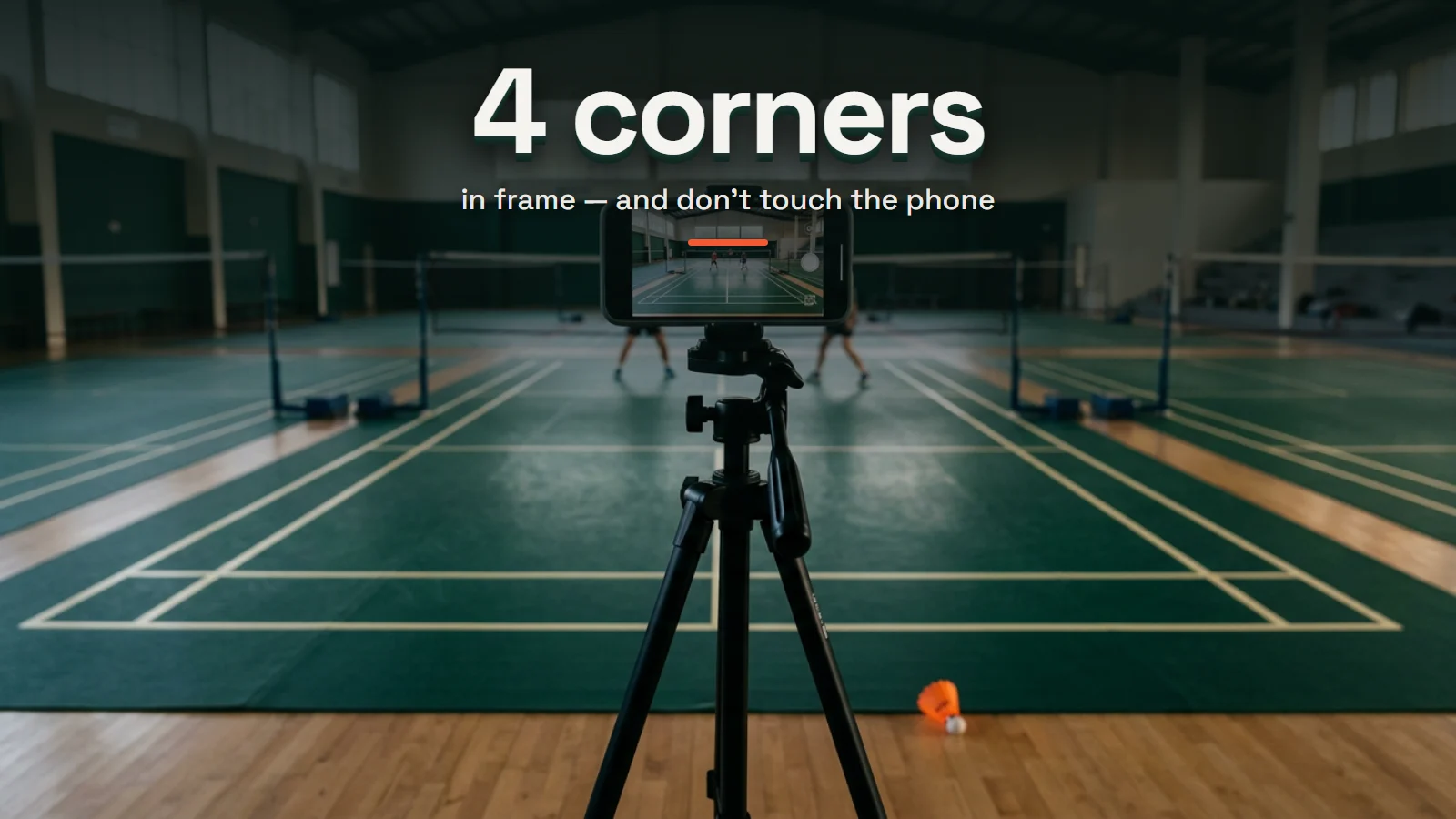
That is the problem Kreeda was built for. Upload a clip of yourself playing and the analysis identifies each shot, estimates smash speed, and puts it alongside your contact height, court coverage and movement - so the number sits in the context that makes it mean something. It runs on footage you record yourself, so what you get back is about your game rather than a lab test.
A 250 km/h smash from a high contact point beats a 300 km/h smash hit flat, every time.